
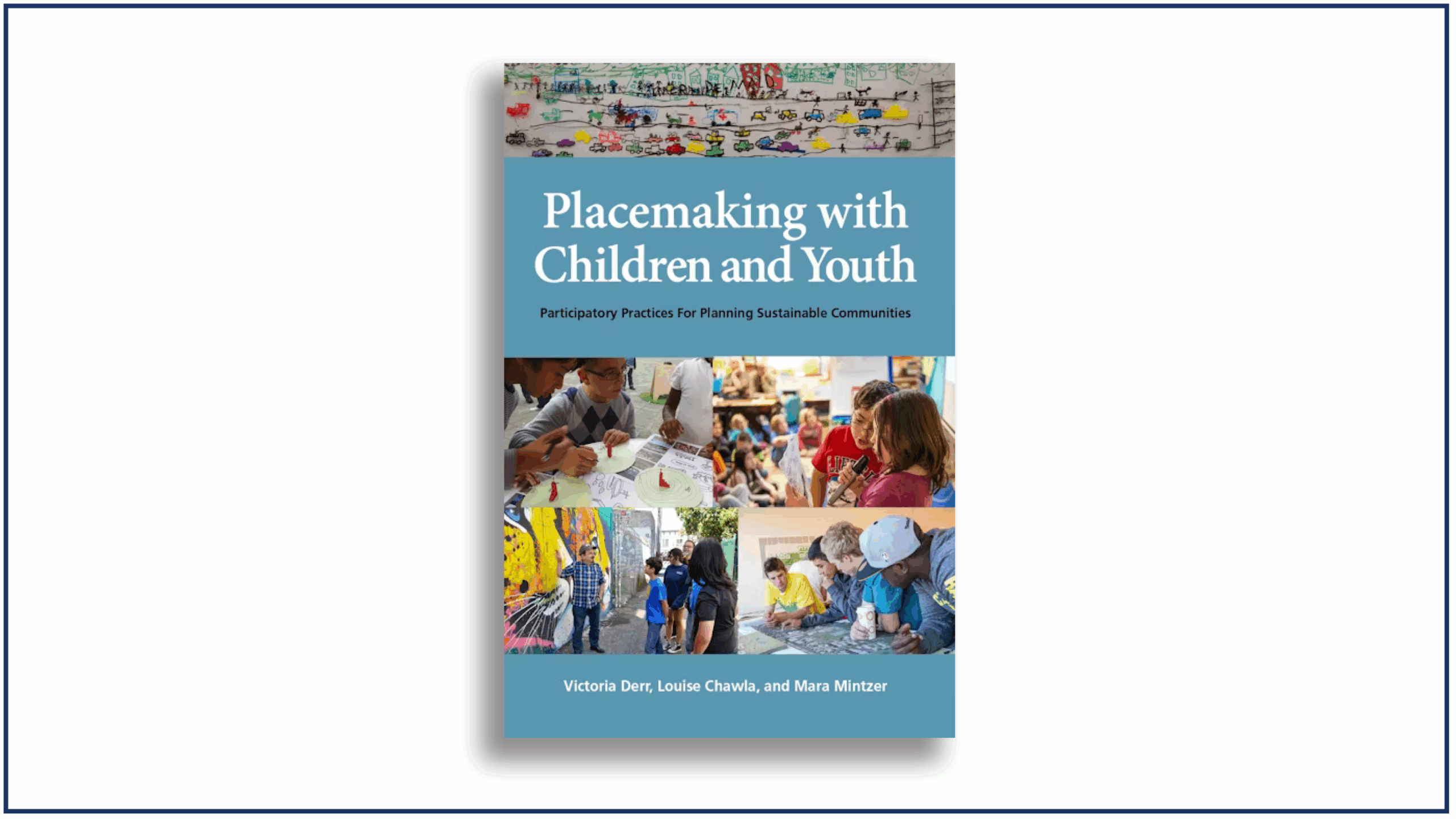
Book Review: Placemaking with children and youth: Participatory strategies for planning sustainable communities
Place. It is more than where. More than what. More than whom. It is the heart of living and learning. No human can escape the built environment, as our species is surrounded and often defined by the structures and complexities that have been developed to replace, tame, embrace, or compensate for the natural world outside. Yet, barriers to engagement with design and development exist for many people, especially children and youth. These barriers prevent the design and development of built environments that embody the needs, desires, and interests of all who live within the built environment. For example, schools are inhabited by children for over eight hours a day 180 days a year. However, are schools designed and developed with the interests and ideas of children in mind? Or, are they designed and developed with the interests and ideas of adults?